

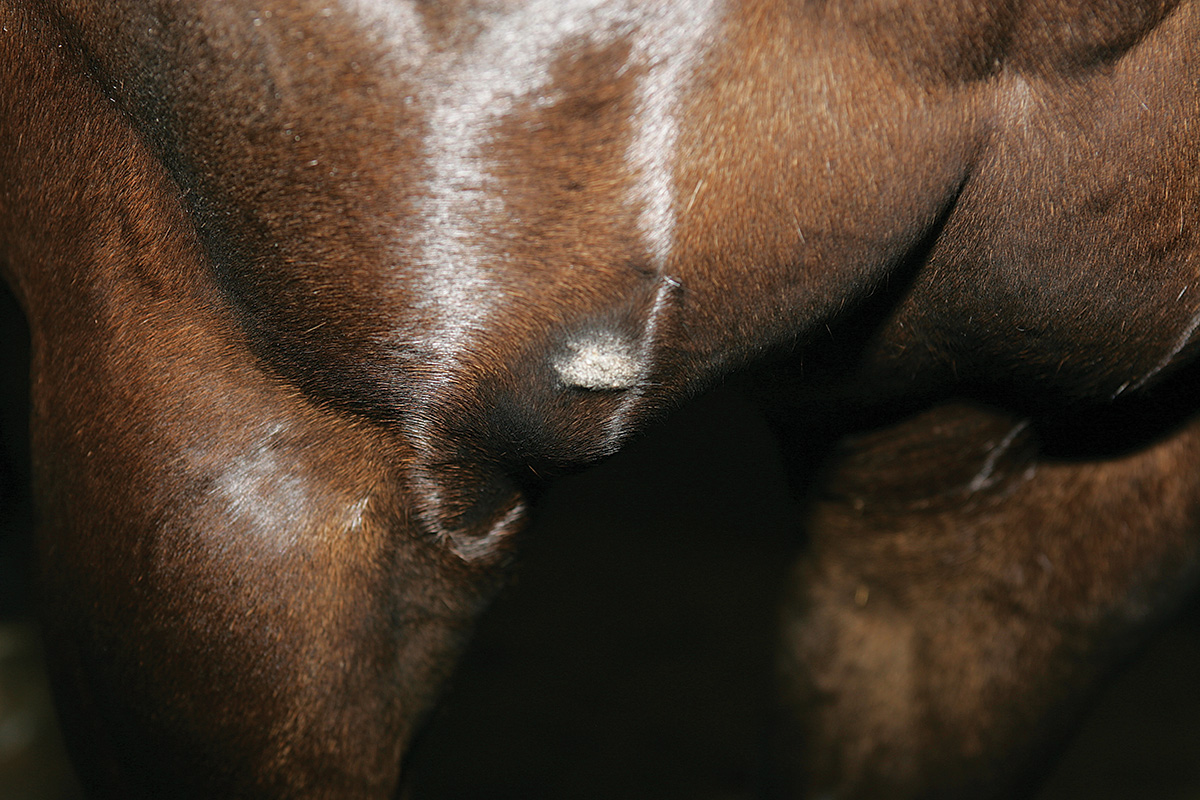
If you’ve noticed an unusual lump, bump, or rough patch on your horse’s skin, you’re not alone—and you’re right to be concerned. A sarcoid on a horse is the most common skin tumor in equines worldwide, affecting horses of all ages, breeds, and colors. These growths can appear anywhere on the body, often starting small but potentially growing larger or multiplying if left unchecked. As horse owners, we know how these can impact performance, comfort, and even resale value. Plus, they can be stubborn to treat, with recurrence rates varying based on the approach.
At Vet Grade, we’ve helped thousands of horse owners tackle sarcoids naturally, drawing from years of experience in veterinary-grade animal care. Our focus on products like bloodroot paste stems from real-world results in addressing these issues without harsh interventions. In this guide, we’ll cover everything you need to know about equine sarcoids: from what they are and what causes them, to the different types, common locations, and a rundown of treatment options. Whether you’re dealing with a single horse skin growth or multiple sites, this pillar guide arms you with the facts to make informed decisions. Let’s dive in.
What Is a Sarcoid on a Horse?
A sarcoid on a horse is a locally aggressive, non-metastatic skin tumor that originates from fibroblasts—the cells responsible for connective tissue. Unlike true warts or melanomas, sarcoids are unique to equines and represent the most frequent equine neoplasm, accounting for up to 36% of all skin tumors in horses. They’re benign in the sense that they don’t spread to distant organs, but they can invade surrounding tissues, making complete removal challenging. Is a sarcoid on a horse cancer? Not in the malignant sense, but their behavior can mimic cancerous growths, leading to ulceration, infection, or interference with tack and movement.
How common are they? Studies show that 1-8% of horses worldwide develop sarcoids at some point, with higher rates in certain breeds like Quarter Horses, Appaloosas, and Arabians. These tumors often appear in young to middle-aged horses, between 3 and 6 years old, though they can strike at any age. The bovine papillomavirus (BPV) plays a central role here—what causes a sarcoid on a horse is primarily infection with BPV types 1 and 2, which horses aren’t natural hosts for. This virus hijacks skin cells after entering through minor wounds or abrasions.
Equine sarcoids differ from other horse skin growths like melanomas or squamous cell carcinomas. Melanomas, for instance, are more common in gray horses and can metastasize, while sarcoids stay local but recur frequently after treatment. Because sarcoids can transform from one type to another if irritated—say, from rubbing or incomplete removal—early identification is key. If you spot a suspicious lesion, consult your vet for a biopsy to confirm it’s an equine sarcoid rather than something else. Meanwhile, keeping flies at bay with a reliable repellent, like our Veterinary Grade Fly-be-gone repellent shampoo (32oz), can help prevent transmission, as insects are suspected vectors.
In essence, a sarcoid on a horse isn’t just a cosmetic issue; it can affect your horse’s quality of life. However, with proper management, many horses lead normal lives post-treatment. As we’ll explore, understanding the types and causes empowers you to choose the right path forward.
The 6 Types of Equine Sarcoids
Equine sarcoids come in six recognized types, each with distinct appearances and behaviors. Identifying the type helps predict how aggressive it might be and guides treatment choices. For example, some respond well to topical applications, while others require more invasive methods. Below, we’ll break down each, including what it looks like and key characteristics. Use this as a reference when examining your horse—sarcoid on a horse pictures can vary, but patterns emerge.

Types | Horse Cancer
6 types of equine sarcoids — occult verrucous nodular fibroblastic
Occult Sarcoids
Occult sarcoids are the flattest and most subtle type, appearing as circular, hairless patches with a slightly rough or scaly surface. They often mimic ringworm or scarring, measuring 2-6 cm in diameter. These are common on the neck, face, or groin and can remain stable for years. However, trauma—like from a halter—can trigger progression to a more aggressive form. They’re the easiest to overlook but respond well to early intervention.
Verrucous Sarcoids
Verrucous types resemble warts, with a raised, rough, cauliflower-like texture. The surface is hyperkeratotic—thick and scaly—and they can bleed if picked at. Typically found on the face, legs, or body, they grow slowly but can ulcerate over time. This type is prone to fly irritation in summer, worsening inflammation. A sarcoid on a horse like this might start small but expand if ignored.
Nodular Sarcoids
Nodular sarcoids present as firm, spherical lumps under the skin, often 0.5-5 cm across. They feel like peas or marbles and may have intact skin or a small ulcer. Common sites include eyelids, groin, and limbs. There are subtypes: Type A (no skin involvement) and Type B (skin-attached). These can be deceptive, as they might not look alarming but can recur after surgery.
Fibroblastic Sarcoids
The most aggressive common type, fibroblastic sarcoids are fleshy, ulcerated masses that resemble proud flesh. They grow rapidly, often after trauma to another sarcoid type, and can reach grapefruit size. Bleeding and infection are frequent issues, especially on legs or sheath. This horse skin growth demands prompt action, as it interferes with movement and attracts flies.
Mixed Sarcoids
As the name suggests, mixed sarcoids combine features of two or more types—say, verrucous and fibroblastic elements in one lesion. They’re common and can evolve over time, making diagnosis tricky without a biopsy. Treatment often addresses the dominant characteristic, but recurrence is higher due to the hybrid nature.
Malevolent Sarcoids
Rare but serious, malevolent sarcoids are invasive, spreading along lymphatic vessels like cords under the skin. They ulcerate easily and form multiple nodules in chains. Often seen on the chest, elbow, or jaw, they’re the toughest to treat and have the highest recurrence rate. Early detection is crucial, as they can debilitate a horse quickly.
To compare, here’s a quick list:
- Occult: Flat, subtle; low aggression.
- Verrucous: Wart-like; moderate growth.
- Nodular: Lumpy, under skin; variable.
- Fibroblastic: Fleshy, ulcerated; high aggression.
- Mixed: Hybrid; unpredictable.
- Malevolent: Spreading; very aggressive.
Knowing these sarcoid types aids in monitoring. If yours matches one, check our Science-Backed Sarcoid Removal in Horses for targeted advice.
Where Do Sarcoids Appear on Horses?
Sarcoids can pop up almost anywhere, but certain areas are hotspots due to thin skin, frequent trauma, or fly exposure. Common locations include the legs, belly and groin, chest, face, ears, eyelids, neck, and sheath. A sarcoid on a horse leg, for instance, might start from a minor cut during turnout, while one on the ear could stem from fly bites. Why does location matter? It influences treatment feasibility—eyelid sarcoids require precision to avoid damaging vision, whereas groin ones might complicate breeding or riding.
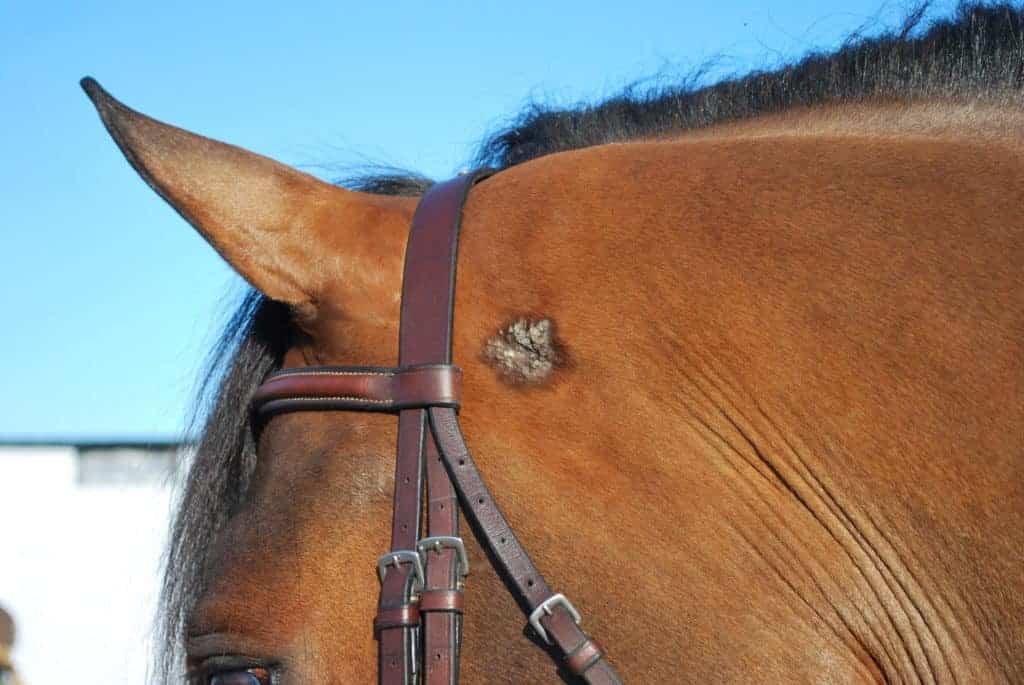
The Complex Puzzle of Sarcoids – The Horse
where do sarcoids appear on horses — common sarcoid locations
Thin-skinned areas like the face and eyelids are vulnerable because BPV enters easily through abrasions. The sheath and groin see high rates due to moisture and irritation. Legs and chest often develop fibroblastic types from wounds or tack rubs. Neck sarcoids might link to halter pressure. Statistically, periocular sites account for about 10-15% of cases, but they’re problematic as they can impair blinking or cause tearing.
Location also affects prognosis. A sarcoid on a horse ear might be more prone to recurrence post-surgery due to limited tissue. Meanwhile, body trunk ones are easier to manage. Flies play a role in transmission, so using preventive measures—like our chlorine dioxide drops for clean water sources—reduces risk. VetGrade Chlorine Dioxide water purification Products help maintain hygienic environments, potentially lowering incidence.
If your horse has a growth in a tricky spot, consult a vet early. Understanding these patterns helps you inspect regularly and act fast.
What Causes Sarcoids on Horses?
What causes a sarcoid on a horse boils down to bovine papillomavirus (BPV) types 1 and 2. This virus, typically found in cattle, crosses to horses via contaminated wounds or insect vectors. BPV DNA integrates into equine skin cells, disrupting normal growth and leading to tumor formation. Research from the University of Kentucky confirms flies as likely transmitters, carrying the virus from cattle to horses.
Transmission occurs through direct contact with infected material—think shared grooming tools, cattle exposure, or fly bites on open skin. However, not every exposed horse develops sarcoids; genetic predisposition is key. Certain breeds show higher susceptibility, linked to major histocompatibility complex (MHC) genes. Cornell University’s studies highlight how some bloodlines are more prone, explaining family clusters.
Are sarcoids contagious horse-to-horse? Casual contact doesn’t spread them, but close proximity in herds with flies might increase risk. For the latest on this, see our post Is Sarcoid Contagious? The Latest Research Explained. Environmental factors like poor wound care or immunosuppression play roles too. As a result, prevention involves fly control and prompt wound treatment.
In short, BPV triggers sarcoids in genetically susceptible horses, amplified by external factors. This understanding shifts focus to proactive care.
Treatment Options Overview
Treating a sarcoid on a horse requires tailoring to type, location, and number. No one-size-fits-all exists, but options range from surgical to natural. Success rates vary; recurrence can hit 50-70% with some methods. A systematic review in Equine Veterinary Journal notes radiotherapy and cryotherapy as top performers, but access limits them.
Surgical excision removes the mass but has high recurrence—up to 70%—unless margins are wide. Cryotherapy freezes the tissue, effective for small lesions with 78-100% resolution in studies. Laser therapy vaporizes sarcoids, ideal for precision areas like eyelids, with 89% success when combined with surgery.
Immunotherapy boosts the immune response; BCG injections show 70-83% regression but require multiple sessions. Autologous vaccines, per UC Davis research, offer promising results in familial cases.
Topical treatments include chemotherapy creams like 5-fluorouracil or imiquimod, with variable efficacy. Natural options shine here: bloodroot paste, derived from Sanguinaria canadensis, targets abnormal cells topically. Vet Grade’s formula has aided countless owners in sarcoid removal without sedation.
For a short and to the point guide on sarcoids click here: https://veterinarygrade.com/blogs/news/what-is-a-sarcoid-on-a-horse

Veterinarian Grade Bloodroot Sarcoid Herbal Paste for The Removal of Sarcoids and growths on large animals.
Vet Grade bloodroot paste for horse sarcoid treatment
Bloodroot paste offers horse owners a natural, at-home approach. Applied directly, it forms a scab that falls off, taking the sarcoid with it. See our Veterinary Grade Bloodroot Paste (1oz) for details. For timelines, check How Long Does It Take for a Sarcoid to Fall Off?.

UK Vet Equine – An update on the treatment of cutaneous tumours
horse sarcoid before and after bloodroot paste treatment
Combining methods—like surgery plus immunotherapy—often yields best results. Consult your vet to match the option to your horse.
Ready to Take Action Against Your Horse’s Sarcoid?
If a sarcoid is impacting your horse, don’t wait—it could grow or multiply. Start with a vet diagnosis, then explore options like our natural bloodroot paste for targeted treatment. Check out the Veterinary Grade Bloodroot Paste (1oz) to get started.
For more tips, subscribe for sarcoid treatment tips and exclusive savings. If water quality is a concern in your barn—potentially aiding fly control—consider our VetGrade Chlorine Dioxide water purification Products.
Frequently Asked Questions About Sarcoids on Horses
Q: What is a sarcoid on a horse?
A: A sarcoid on a horse is a common, locally aggressive skin tumor caused by bovine papillomavirus, appearing as lumps, warts, or flat patches. These benign but persistent growths affect 1-8% of horses and can recur after treatment if not fully addressed.
Q: What causes sarcoids on horses?
A: Sarcoids on horses are primarily caused by infection with bovine papillomavirus types 1 and 2, transmitted via flies, wounds, or contact with cattle. Genetic predisposition in certain breeds increases susceptibility, leading to abnormal cell growth in the skin.
Q: Are sarcoids on horses cancerous?
A: Sarcoids on horses are not cancerous in the malignant sense, as they don’t metastasize to distant organs. However, they are tumors that can invade local tissues aggressively, mimicking some cancer behaviors and requiring treatment to prevent complications.
Q: Are horse sarcoids contagious?
A: Horse sarcoids are not directly contagious between horses through casual contact. Transmission occurs via bovine papillomavirus carried by flies or contaminated equipment, but infected horses don’t typically spread it horse-to-horse without these vectors.
Q: What does a sarcoid on a horse look like?
A: A sarcoid on a horse can appear as a flat scaly patch, wart-like growth, firm nodule, or ulcerated mass, depending on the type. They vary in size from small lumps to large fleshy lesions and often occur on the legs, face, or groin.
Q: Can you treat a horse sarcoid at home?
A: You can treat some horse sarcoids at home with topical options like bloodroot paste, which targets the growth without sedation. Always confirm diagnosis with a vet first, as improper treatment can worsen the condition or cause recurrence.
Q: How long does it take for a sarcoid to fall off after treatment?
A: After treatment like bloodroot paste, a sarcoid typically forms a scab and falls off in 7-14 days, though full healing may take 4-6 weeks. Timelines vary by size, type, and method, with monitoring essential to ensure no recurrence.
- Social Sharing:
- Facebook Title: What Is a Sarcoid on a Horse? Complete Equine Sarcoid Guide
- Facebook Description: The most common skin tumor in horses — what causes it, what it looks like, and how to treat it naturally. Complete guide from Vet Grade.
- X (Twitter) Title: What Is a Sarcoid on a Horse? Complete Equine Sarcoid Guide
- X Description: The most common skin tumor in horses — what causes it, what it looks like, and how to treat it naturally. Complete guide from Vet Grade.
- Outbound Link Research:
- https://gluck.ca.uky.edu/sites/gluck.ca.uky.edu/files/2022-05/q_apr_2019_0.pdf (University of Kentucky Gluck Equine Research Center commentary on bovine papillomavirus and equine sarcoids)
- https://cehhorsereport.vetmed.ucdavis.edu/sites/g/files/dgvnsk9021/files/inline-files/HorseReport_FALL_24_FINAL_SinglePages.pdf (UC Davis Center for Equine Health report on equine cancer, including sarcoid prevalence and BPV links)





1 Comment